Planning a safari elopement in South Africa can sound complicated when you first begin.
You are not only planning a wedding. You are also choosing a safari lodge, coordinating international travel, arranging transfers into the reserve, deciding between a legal or symbolic ceremony, and building your wedding day around the rhythm of the bush.
But when those decisions are made in the right order, the process can feel surprisingly simple.
I am Heidi, a South African-born safari elopement photographer and planner now based in the United States. I help international couples plan all-inclusive safari elopements in South Africa, from choosing the right lodge to coordinating the wedding day itself.
This guide breaks the process into a clear planning timeline, beginning approximately 12 months before your elopement and continuing through your arrival in South Africa.
Already wondering what a safari elopement actually involves? Start with my complete guide to planning a safari elopement in South Africa for international couples.


Your Safari Elopement Planning Checklist at a Glance
Most couples can plan their safari elopement within approximately 9 to 12 months, although luxury lodges and popular travel dates may need to be reserved earlier.
Here is the general order I recommend:
- 12–18 months before: establish your priorities, approximate budget, and guest count
- 9–12 months before: choose your safari region, lodge, and package
- 8–10 months before: confirm your date and begin travel planning
- 6–9 months before: decide between a legal or symbolic ceremony
- 4–6 months before: plan the wedding-day experience and book remaining vendors
- 2–4 months before: finalize attire, documents, flights, and transfers
- 1 month before: confirm every detail and prepare for travel
- Arrival week: settle in, slow down, and enjoy the experience
This timeline is flexible. Some couples plan farther ahead, while others put everything together within six months. The important thing is making the major decisions in the right sequence.
12–18 Months Before: Decide What You Want the Experience to Feel Like

Before comparing lodges or choosing a date, talk about the kind of experience you want.
This is the foundation for every decision that follows.
Ask yourselves:
- Will it be just the two of you?
- Would you like to bring a few family members or friends?
- Do you want a relaxed, intimate lodge or an ultra-luxury experience?
- Is seeing the Big Five one of your highest priorities?
- Would you prefer dry golden landscapes or lush green scenery?
- Do you want the elopement and honeymoon to happen in one place?
- Would you like to add Cape Town, the Winelands, or the coast afterward?
- Is your ceremony going to be legal or symbolic?
- What approximate investment feels comfortable?
You do not need every answer immediately. You simply need enough direction to narrow the options.
For example, a couple prioritizing exceptional wildlife, privacy, and luxury may be drawn toward Sabi Sands or another private reserve in Greater Kruger.
A couple wanting a malaria-free safari with easier access for guests may consider the Eastern Cape.
A couple dreaming of combining safari and beach may prefer KwaZulu-Natal.
Establish an Approximate Budget
Your lodge will usually be one of the largest variables in the total package price.
Safari elopement costs can change substantially depending on:
- The lodge and reserve
- The number of nights
- The time of year
- Whether it is just the two of you or includes guests
- Photography coverage
- Domestic flights and transfers
- Florals and ceremony styling
- Hair and makeup
- Videography
- Private safari vehicles
- Spa treatments and additional experiences
You do not need a detailed line-item budget yet. A realistic overall range is enough to begin matching you with suitable lodges and package options.
9–12 Months Before: Choose Your Safari Region

Once you understand your priorities, the next decision is where in South Africa you would like to elope.
You do not need to research every reserve in the country. Begin by choosing the region that best matches the experience you want.
Greater Kruger
Greater Kruger is one of the strongest choices for international couples wanting a classic South African safari.
It includes private reserves such as:
- Sabi Sands
- Timbavati
- Balule
- Klaserie
- Thornybush
This region is especially well suited to couples who prioritize:
- Excellent wildlife viewing
- Big Five safaris
- Luxury lodges
- Private game drives
- Dramatic bushveld scenery
- Easy connections through Johannesburg
It also offers one of the widest ranges of lodge styles, from intimate owner-run properties to some of the most luxurious safari lodges in Africa.
Eastern Cape
The Eastern Cape can be a good option for couples wanting:
- A malaria-free safari
- Easier access from Cape Town
- A safari-and-coast itinerary
- Guest-friendly travel logistics
- A range of mid-level and luxury lodges
The scenery can feel different from Greater Kruger, with rolling hills, rivers, open grasslands, and coastal vegetation.
KwaZulu-Natal
KwaZulu-Natal works especially well for couples who want to combine safari with the Indian Ocean coastline.
It offers:
- Diverse wildlife
- Lush landscapes
- Bush-and-beach itineraries
- Luxury reserves such as Phinda
- Access through Durban or regional airports
Still deciding whether safari is the right setting? Explore more of the best places to elope in South Africa, including the coast, mountains, and Winelands.
Private Reserve or National Park?
For an elopement, I generally recommend a private game reserve rather than holding the experience inside a busy public section of a national park.
Private reserves usually offer more flexibility with:
- Ceremony locations
- Private vehicles
- Photography
- Off-road wildlife viewing
- Sundowner stops
- Lodge coordination
- Privacy
You can read a more detailed comparison in my guide to why a private game reserve is usually better for a safari elopement.
9–12 Months Before: Choose Your Safari Lodge

Once you have selected a region, you can begin comparing lodges.
This is where many couples become overwhelmed because a beautiful lodge is not automatically the right elopement lodge.
A lodge may look incredible online but have:
- Limited privacy
- Large guest numbers
- Strict ceremony rules
- Difficult travel logistics
- Inflexible safari schedules
- Few suitable ceremony locations
- Suites that are dark or difficult to photograph
- Restrictions around outside vendors
- No experience hosting intimate weddings
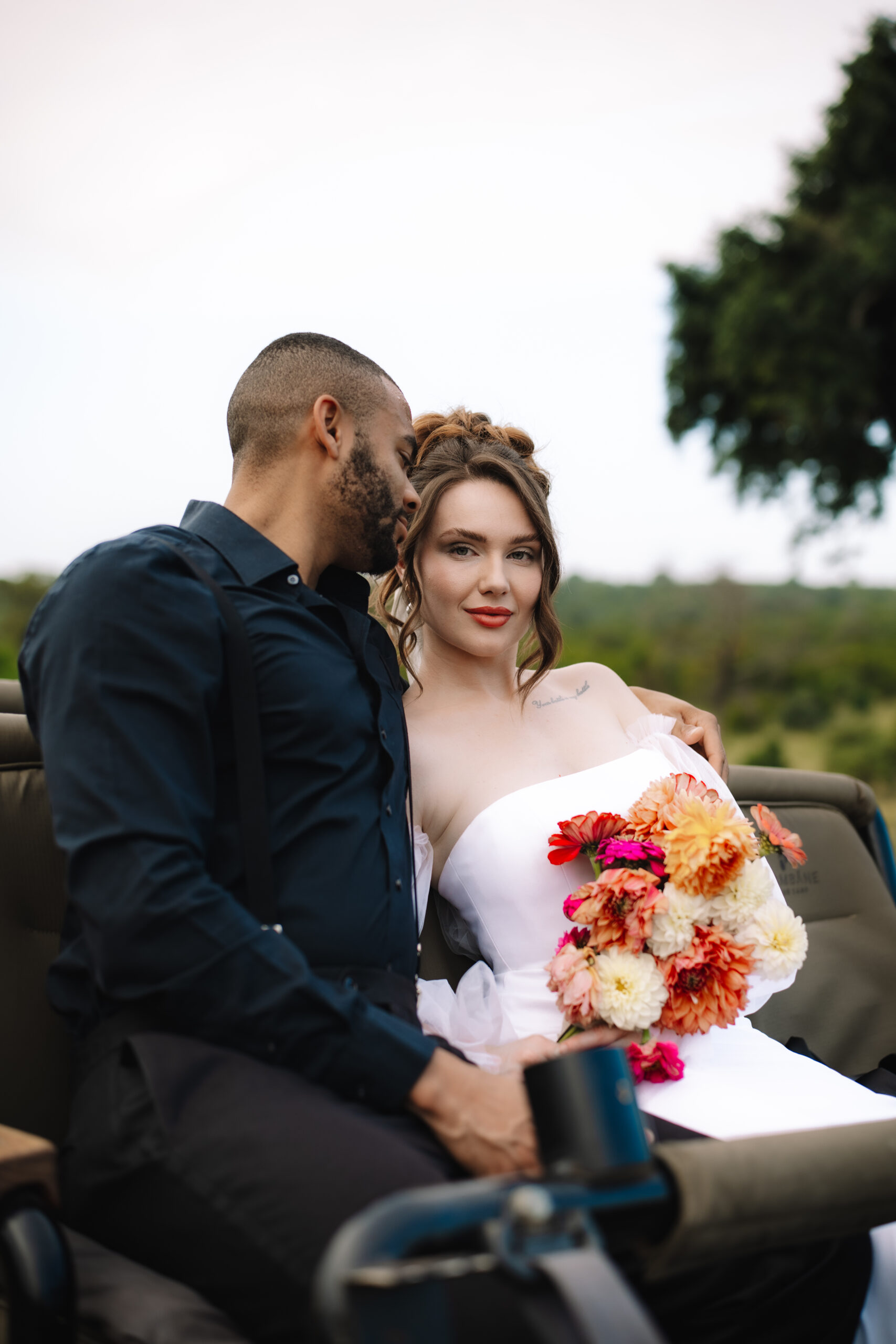
The best lodge for your safari elopement should work for the entire experience, not only the accommodation. To see how the lodge, ceremony location, safari drives, and wedding timeline come together in real life, take a look at Kendra and Marquis’s luxury safari elopement at Isambane Lodge.
What to Consider When Choosing a Lodge
Look at:
- The reserve and quality of wildlife viewing
- Number of suites and overall privacy
- Lodge design and natural light
- Ceremony-location options
- Whether a private safari vehicle is available
- Flexibility around photography
- Accessibility for hair, makeup, florals, and officiants
- Travel time from the nearest airport
- Whether meals, drinks, and safari drives are included
- Availability of spa treatments or private dining
- Guest accommodation, if anyone is joining you
- The lodge’s willingness to coordinate an elopement
This is one of the biggest reasons my packages include lodge-selection support. Instead of asking couples to sort through hundreds of properties, I recommend lodges based on their priorities, preferred style, travel plans, and investment range.
Reserve the Lodge Before Booking International Flights
Do not book flights around an unconfirmed lodge.
The lodge, room availability, ceremony date, and package should generally be confirmed first. Once those dates are secured, you can build the rest of the trip around them.
Luxury safari lodges can have limited availability because many are intentionally small. Some have fewer than ten suites, so popular dates may disappear well in advance.
8–10 Months Before: Confirm Your Elopement Date


After selecting the lodge, confirm the exact dates of your stay and your preferred ceremony day.
I usually recommend staying at least three nights:
Day One
Arrive at the lodge, settle in, enjoy your first safari, and recover from traveling.
Day Two
Enjoy a full safari day without wedding pressure. This also provides flexibility if luggage or flights are delayed.
Day Three
Your elopement day.
Day Four
Wake up married, enjoy another safari, relax at the pool or spa, and experience the lodge without immediately needing to leave.
Four or five nights can feel even better, especially when the lodge is also serving as part of your honeymoon.
Choose a Weekday When Possible
A weekday elopement may provide:
- Better lodge availability
- More flexibility with vendors
- Easier flight options
- Quieter ceremony areas
- Fewer competing events
Because most safari lodges operate every day of the week, there is usually little advantage to holding the ceremony on a Saturday.
8–10 Months Before: Decide Which Season Fits You

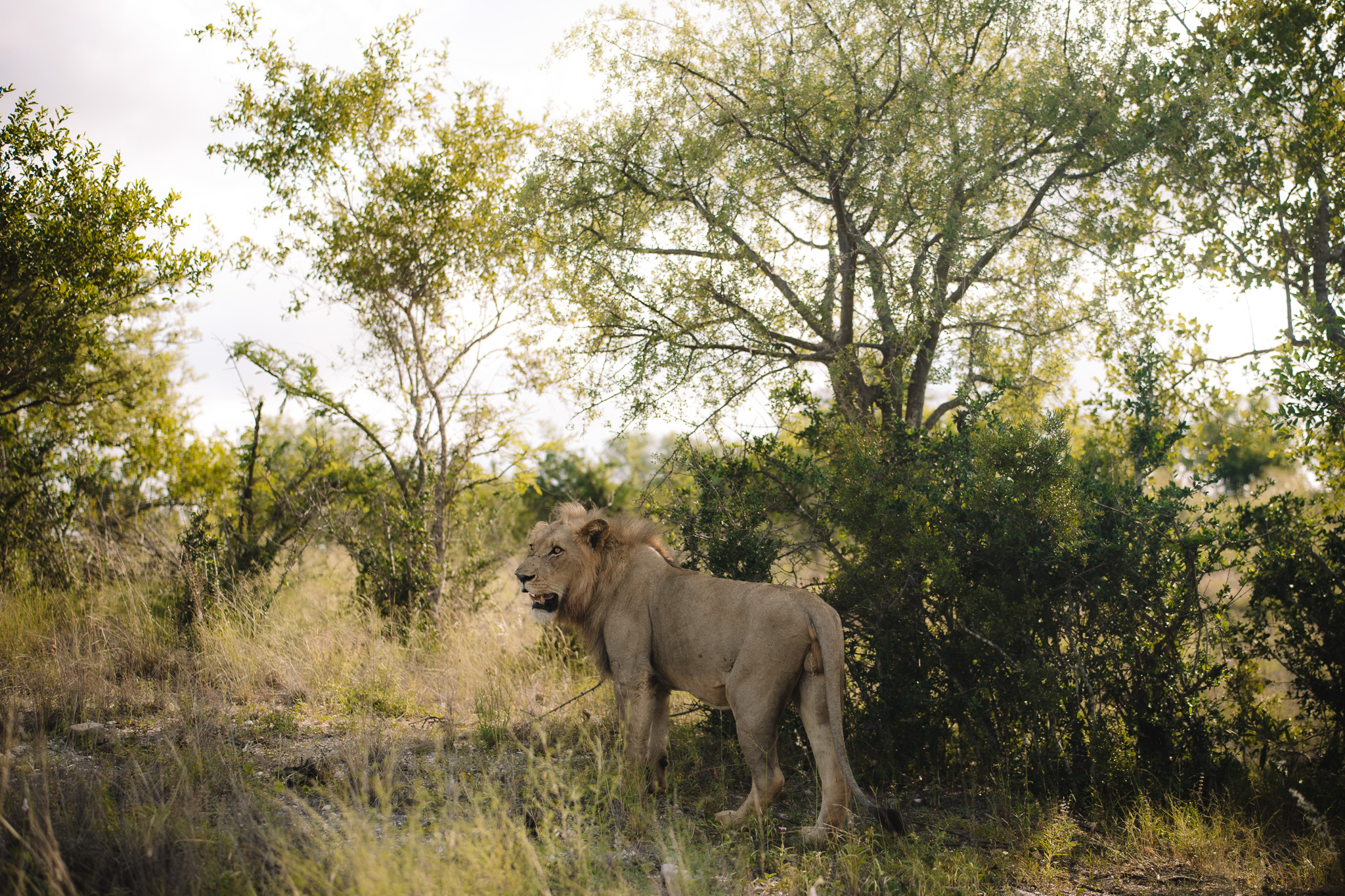

South Africa’s safari regions generally have two broad seasons: the drier winter period and the greener summer period.
Neither is automatically better. They simply create different experiences.
Dry Season
Approximately May through September in many northern safari regions.
Couples often choose the dry season for:
- Easier wildlife visibility
- Cooler daytime temperatures
- Golden and earthy scenery
- Lower rainfall
- Fewer insects
- Dramatic dusty safari photographs
Early mornings and evenings can be surprisingly cold, particularly on open game vehicles.
Green Season
Approximately October through April in many northern regions.
Couples may prefer green season for:
- Lush landscapes
- Dramatic skies
- Newborn animals
- Warmer evenings
- Vibrant photography
- Fewer crowds during parts of the season
Afternoon rain is possible, and some areas can become hot and humid. However, rain showers are often short and can create incredible skies and light.
Do Not Choose Based Only on Wildlife Guarantees
No lodge, photographer, or planner can guarantee that a particular animal will appear during your vows or portraits.
Instead, choose your season based on the complete experience:
- Temperature
- Landscape
- Wildlife visibility
- Lodge atmosphere
- Photography style
- Travel dates
- Honeymoon plans
The unpredictability is part of what makes a real safari elopement so special.
6–9 Months Before: Choose a Legal or Symbolic Ceremony

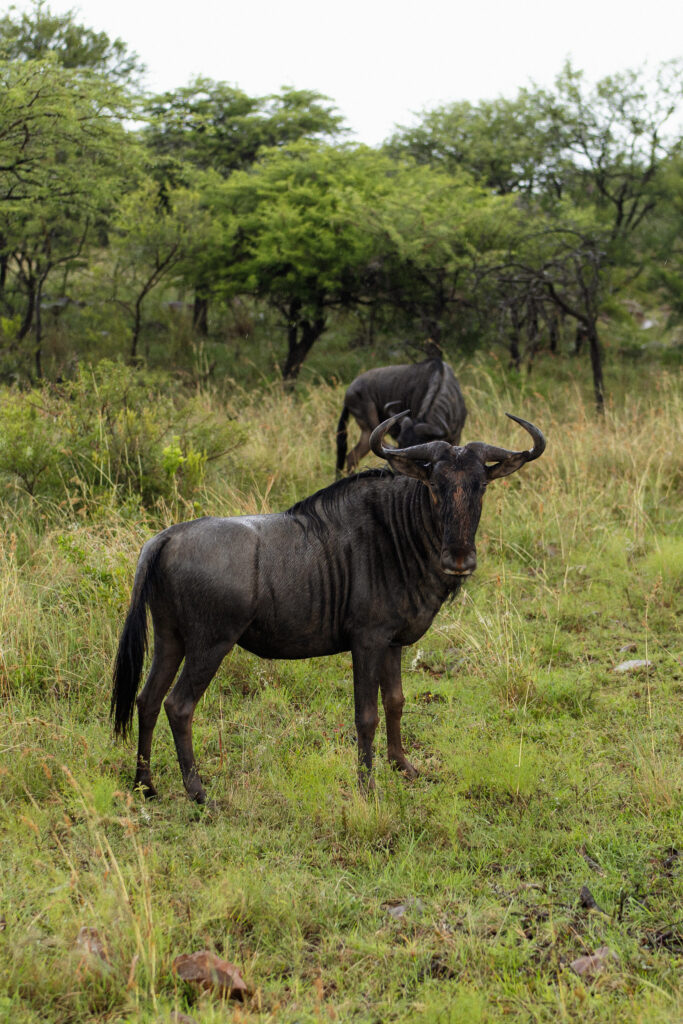

International couples generally have two options.
Option One: Legally Marry in South Africa
Foreign couples can potentially complete a legally recognized marriage in South Africa, but the process may involve additional documentation, a registered marriage officer, identity verification, and coordination with the Department of Home Affairs.
Requirements can vary depending on:
- Citizenship
- Previous marriages
- Country of residence
- Type of marriage
- Required supporting documents
- Current administrative procedures
Begin this process early and confirm the exact requirements with your marriage officer and the appropriate authorities.
Option Two: Complete the Legal Marriage at Home
Many of my couples complete the legal paperwork in their home country and hold a symbolic ceremony in South Africa.
The safari ceremony can still include:
- Personal vows
- Rings
- An officiant or celebrant
- Readings
- A first kiss
- A champagne toast
- A signed keepsake certificate
- Every meaningful part of a wedding ceremony
This option reduces administrative uncertainty and gives couples more flexibility around the ceremony location and timeline.
Neither option makes the experience more or less real. The best choice depends on how much legal administration you want to handle internationally.
6–9 Months Before: Book the Core Safari Elopement Team
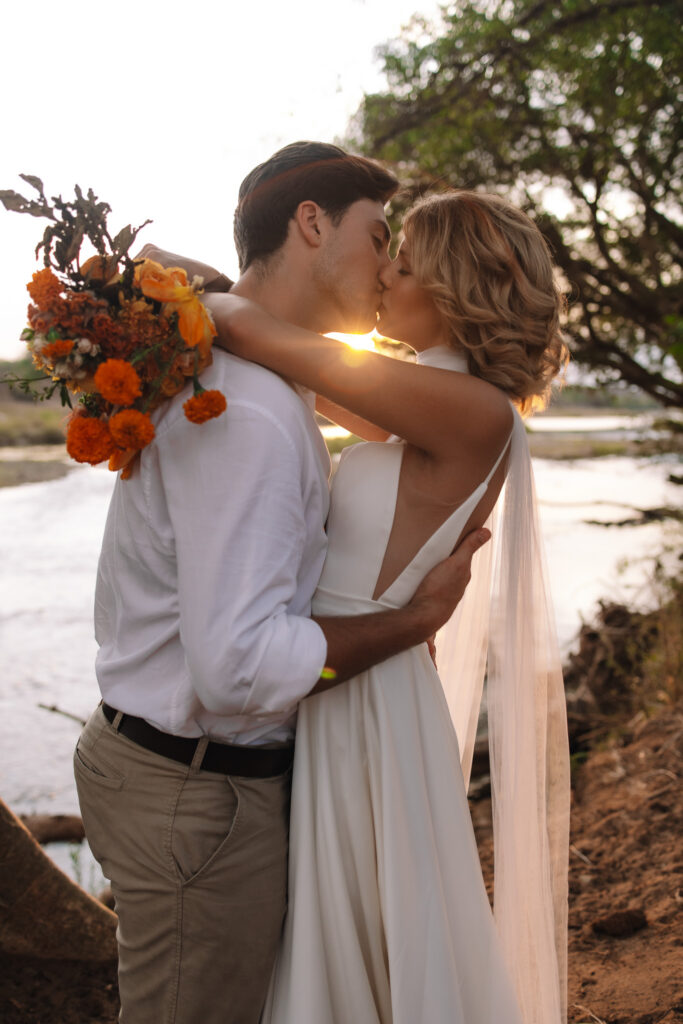
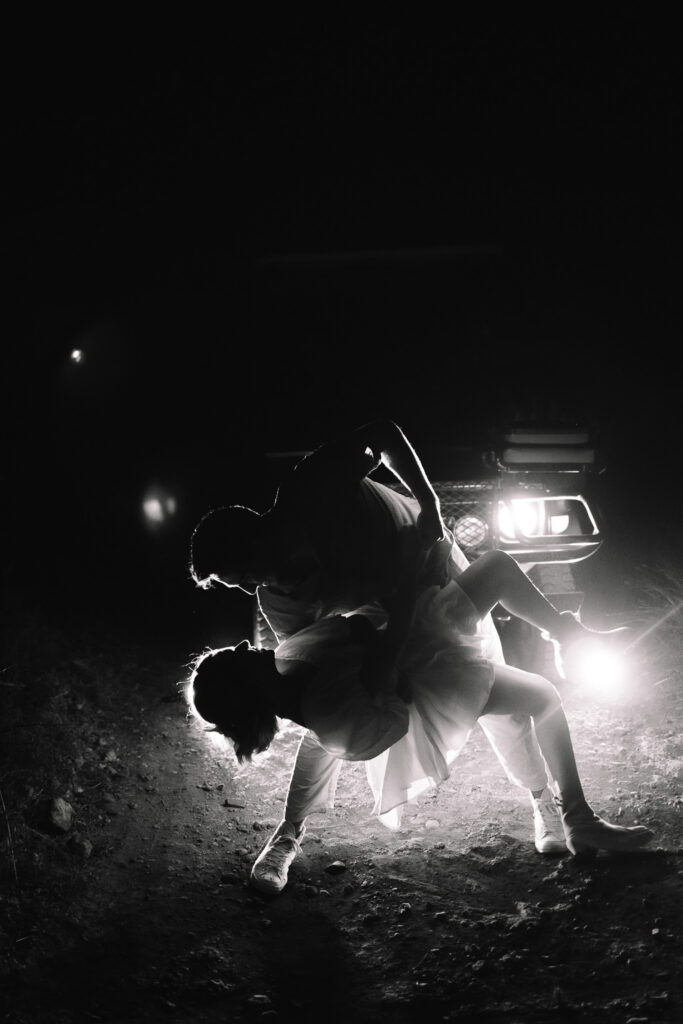
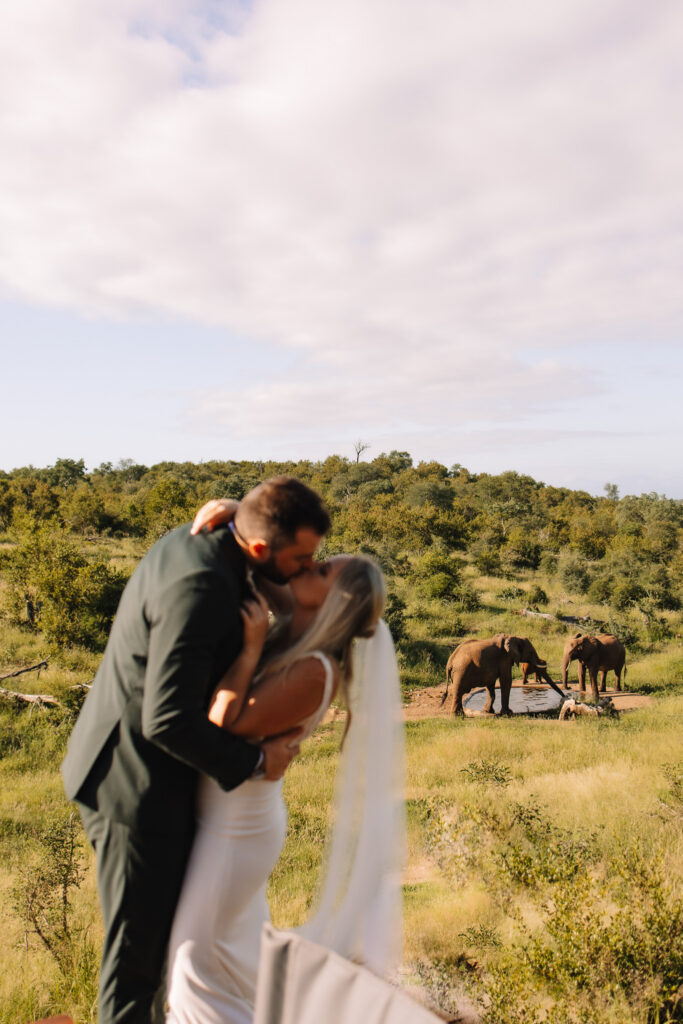
After your lodge and date are confirmed, make sure the people responsible for the wedding experience are secured.
Depending on your package, this may include:
- Photographer
- Planner
- Marriage officer or celebrant
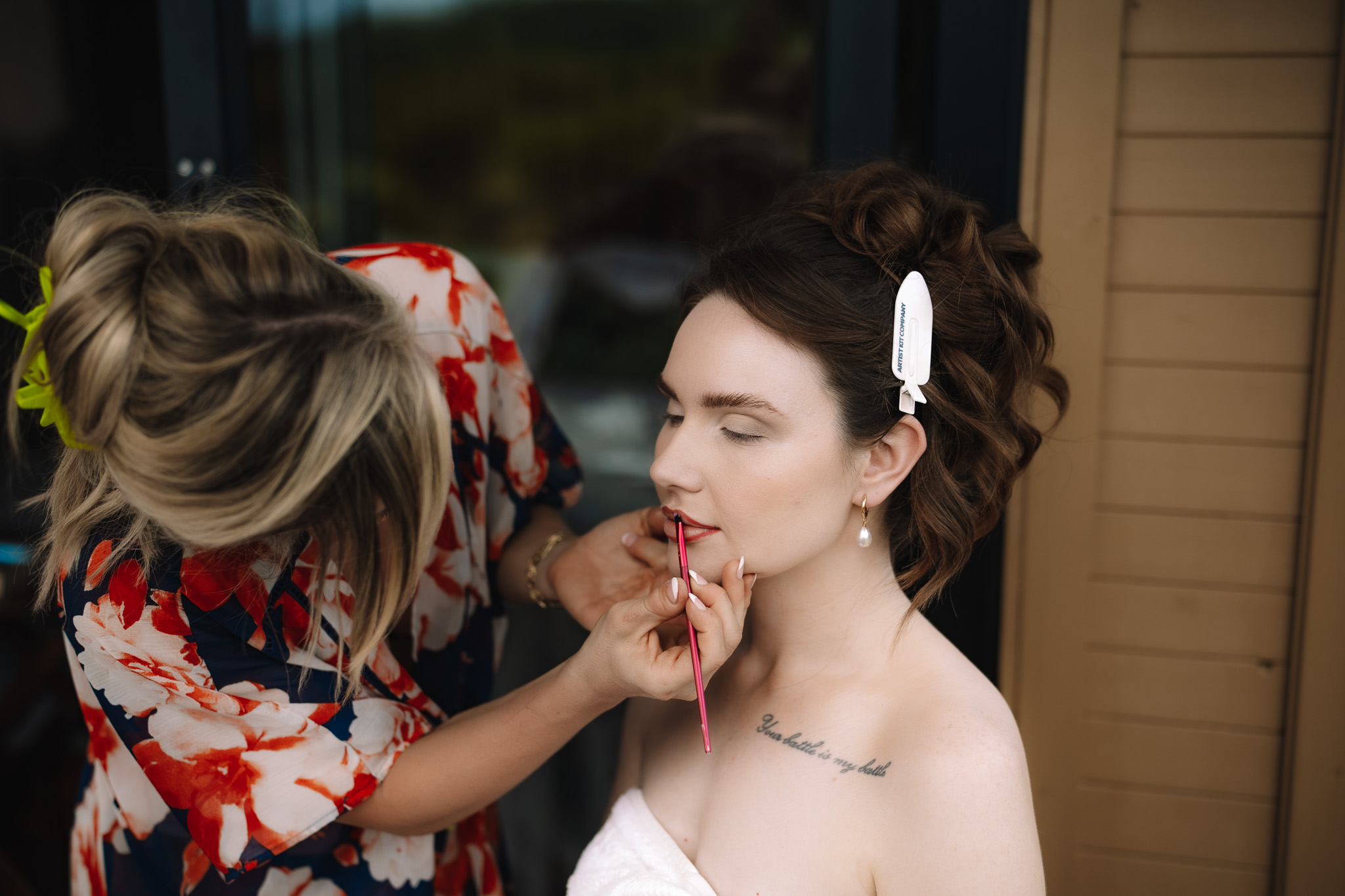
- Hair and makeup artist
- Florist
- Videographer
- Lodge coordinator
- Private safari guide and tracker
- Transfer company
My all-inclusive safari elopement packages combine many of these elements so couples do not have to independently find, vet, and coordinate several vendors in another country.
A typical package may include:
- Luxury safari-lodge accommodation
- Meals, snacks, and selected drinks
- Daily safari drives
- Airport or regional transfers
- Photography
- Planning and lodge coordination
- Hair and makeup
- Florals
- Officiant or celebrant
- Wedding-day timeline creation
You can explore my all-inclusive safari elopement packages in South Africa to see how the experience is structured.
6–8 Months Before: Begin Planning International Travel


Once the lodge dates are confirmed, begin mapping the travel route.
Most international couples will enter South Africa through:
- Johannesburg
- Cape Town
Johannesburg is often the most efficient international gateway for Greater Kruger and many northern safari reserves.
Depending on the lodge, your onward journey may include:
- A scheduled flight to a regional airport
- A lodge road transfer
- A short charter flight
- A transfer from a private airstrip
- A combination of flying and driving
Common regional airports for safari trips include:
- Hoedspruit
- Skukuza
- Mbombela
- Gqeberha
- Durban
Your route should be based on your specific lodge rather than the airport that appears closest on a map.
Build in a Buffer Before the Safari
Whenever possible, avoid connecting directly from a long international flight to the lodge on the same day.
I recommend arriving in South Africa at least one day before traveling into the reserve. Two days is even better.
That buffer helps protect against:
- Missed connections
- Delayed luggage
- Jet lag
- Weather interruptions
- Schedule changes
- Arriving exhausted immediately before the wedding
Many couples spend their first night in Johannesburg or Cape Town before continuing to the lodge.
4–6 Months Before: Design the Elopement-Day Experience

Now you can move from logistics into the actual wedding.
Begin by deciding what you would like the day to include.
Possibilities include:
- A sunrise safari
- Breakfast overlooking the bush
- A slow morning at the lodge
- Getting ready separately or together
- A first look
- Private vows
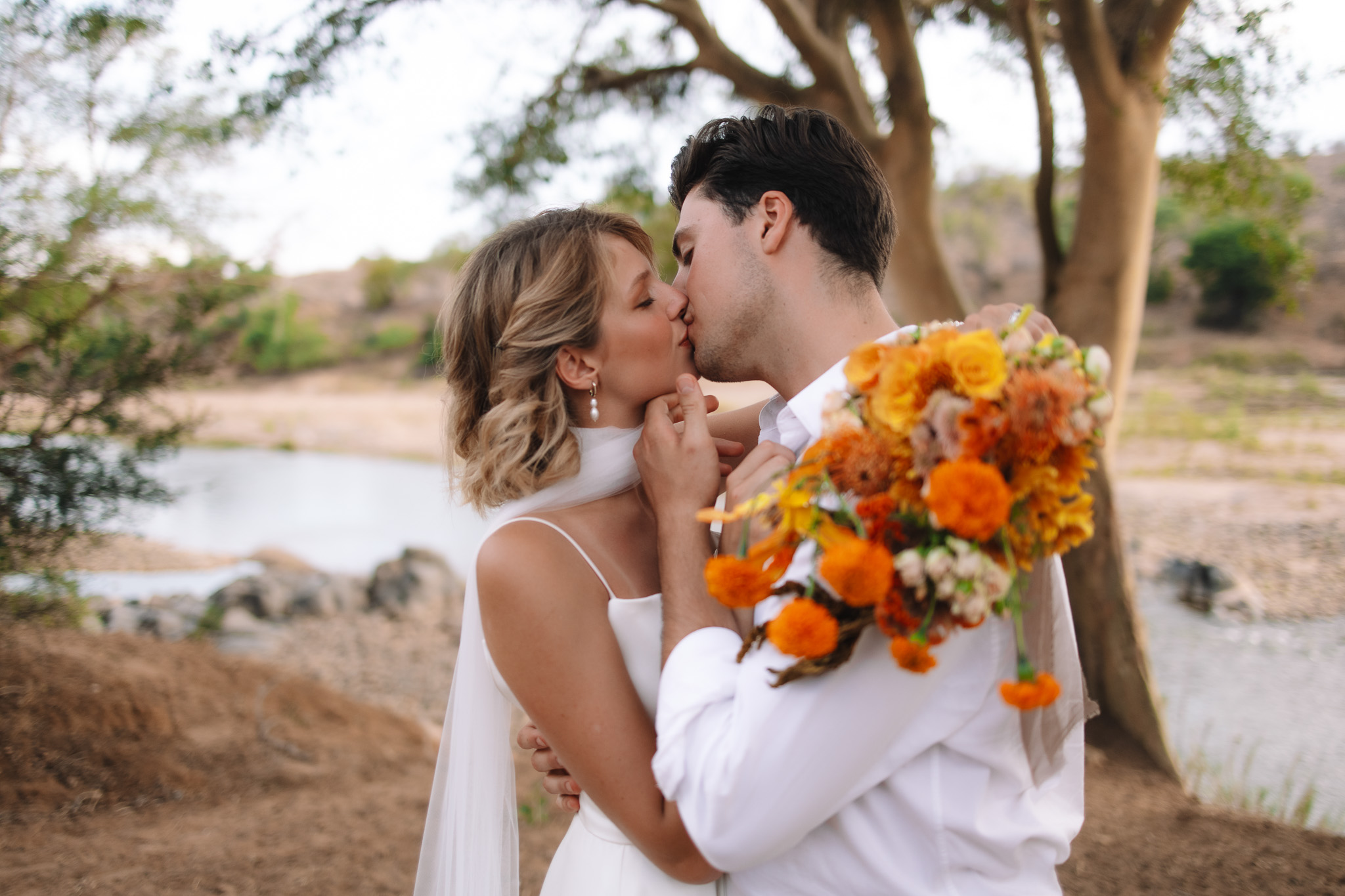
- A ceremony beneath a tree or overlooking a riverbed
- A champagne toast
- A sunset safari
- Sundowner drinks
- A private bush dinner
- Cake or dessert
- A first dance
- Stargazing
- Night portraits
- A couples massage
- A pool or plunge-pool celebration
You do not need to fill every hour.
One of the best things about a safari elopement is that it can feel spacious. You are not rushing through a conventional wedding timeline or trying to entertain a large guest list.
Let the Lodge’s Safari Schedule Shape the Day
Safari lodges usually operate around morning and afternoon game drives.
A typical rhythm may look like:
- Sunrise game drive
- Breakfast
- Rest during the warmest part of the day
- Getting ready
- Ceremony
- Sunset game drive and portraits
- Dinner
Your photography timeline should work with this rhythm rather than against it.
The final schedule will depend on:
- Sunrise and sunset times
- Season
- Lodge drive schedule
- Ceremony location
- Hair and makeup timing
- Travel time inside the reserve
- Whether a private vehicle is booked
- Wildlife conditions
- Weather
4–6 Months Before: Choose Your Ceremony Location


Your lodge and guide can help identify potential ceremony locations inside the reserve.
Possible settings include:
- A dry riverbed
- An open plain
- A rocky overlook
- A large tree
- A waterhole
- A lodge deck
- A riverbank
- A secluded bush clearing
The final location should be selected based on more than appearance.
Important considerations include:
- Safety
- Accessibility
- Sun direction
- Wind
- Privacy
- Wildlife activity
- Reserve rules
- Driving time
- Guest mobility
- Photography conditions
A beautiful location at noon may not photograph as well as a simpler location with excellent late-afternoon light.
Keep the Setup Simple
The bush already creates an incredible ceremony backdrop.
Most safari elopements do not need a large arch or extensive décor. A thoughtful setup might include:
- A bouquet and buttonhole
- A small arrangement
- A rug
- Two chairs
- Lanterns
- Champagne
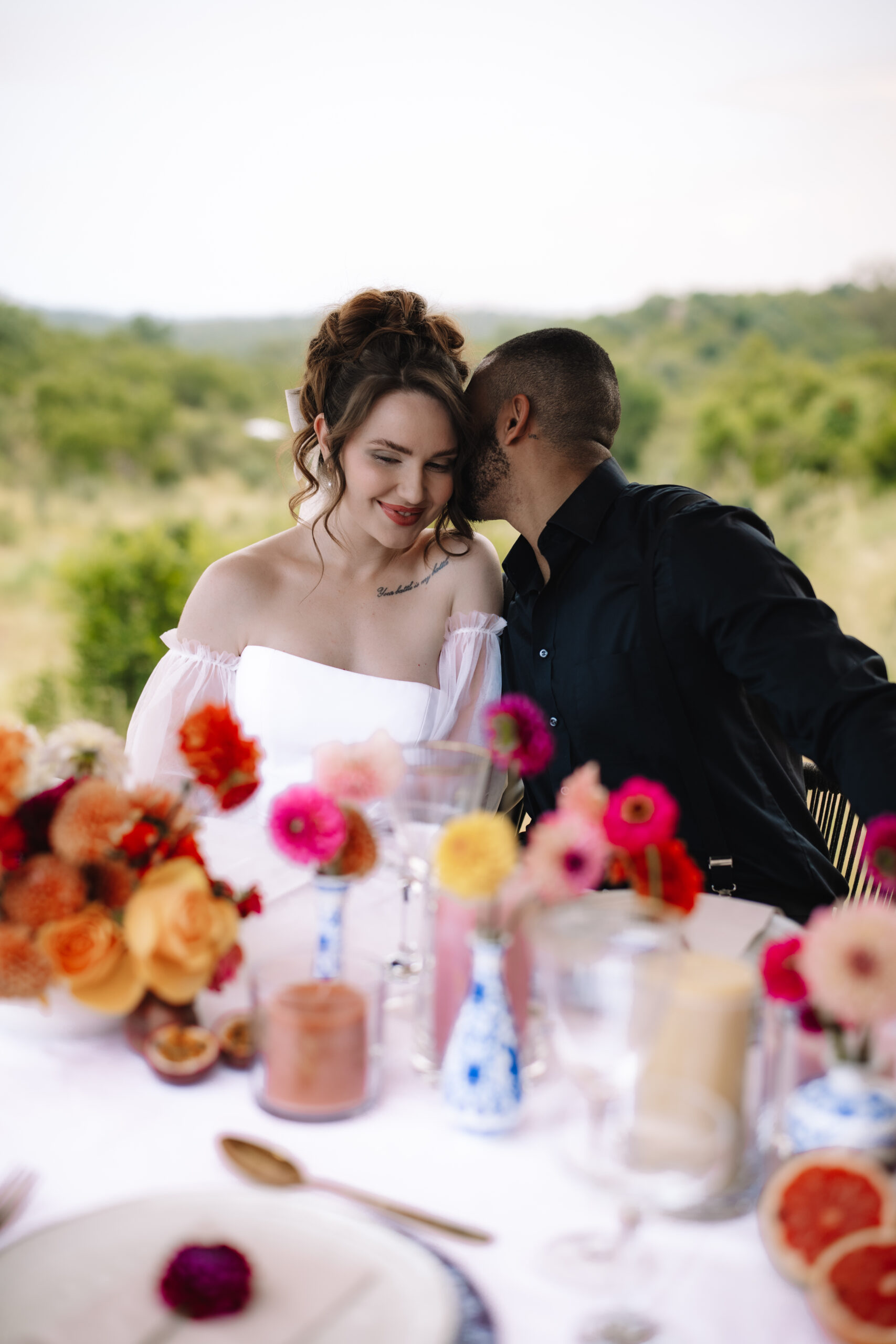
- A private dinner table
- Personal vow books
Simple details often feel more natural in the environment and allow the landscape to remain the focus.
3–5 Months Before: Choose Your Wedding Attire


Safari wedding attire should still feel special, but it also needs to work in a natural environment.
Wedding Dresses and Outfits
Look for:
- Lightweight fabrics
- Comfortable movement
- Breathable construction
- A manageable train
- Fabrics that photograph well in wind
- A silhouette you can comfortably wear in a safari vehicle
Dust and plant material are part of the environment. Your dress may not remain perfectly clean, and that is completely normal.
Suits and Other Wedding Attire
Good options include:
- Lightweight suits
- Linen blends
- Neutral colors
- Warm earth tones
- Breathable shirts
- Comfortable leather shoes or boots
You do not have to dress in khaki simply because you are on safari. The goal is to choose clothing that feels like you while remaining comfortable in the climate.
Shoes
Bring shoes you can walk in on uneven ground.
Some couples wear formal shoes for the ceremony and switch to boots or comfortable shoes for the safari and portraits.
2–4 Months Before: Finalize Flights and Transfers

By this point, confirm:
- International flights
- Domestic or regional flights
- Hotel before the safari
- Lodge transfer
- Departure transfer
- Honeymoon transportation
- Baggage restrictions
- Transfer contact information
Pay particular attention to baggage limits on smaller regional or charter flights. Soft-sided luggage may be required on certain aircraft.
Wedding attire may also need special planning. Ask the airline how it handles garments and whether your dress or suit can travel as carry-on luggage.
I generally recommend keeping the following with you rather than checking them:
- Passports
- Marriage documents
- Rings
- Vow books
- Essential medication
- One change of clothing
- Critical wedding details
2–3 Months Before: Confirm Documents and Travel Requirements
Review all administrative requirements that apply to your trip.
These may include:
- Passport validity
- Blank passport pages
- Visa requirements
- Travel insurance
- Marriage documents
- Vaccination or health requirements
- Driving requirements, if renting a vehicle
- Consent documents for children, when applicable
- Airline entry requirements
Travel and marriage requirements can change, so confirm them through official government, airline, and marriage-officer sources rather than relying only on an older blog post.
Purchase Comprehensive Travel Insurance
Travel insurance is particularly important for an international wedding involving advance lodge and vendor payments.
Look for appropriate coverage relating to:
- Trip cancellation
- Trip interruption
- Medical treatment
- Emergency evacuation
- Delayed luggage
- Missed connections
- Supplier failure
- Severe weather
- Activities included in your itinerary
Read the policy carefully. Coverage and exclusions vary significantly.
1–2 Months Before: Build Your Packing List


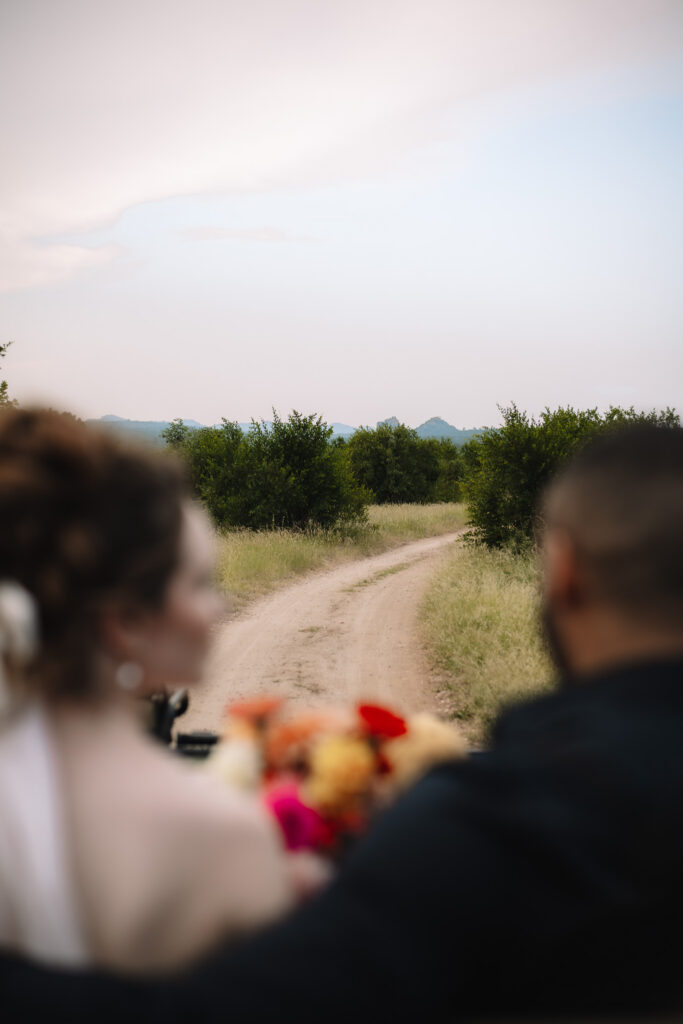
Your safari packing list should include wedding items, normal travel essentials, and clothing for game drives.
Wedding-Day Items
- Wedding attire
- Shoes
- Rings
- Vow books
- Jewelry
- Hair accessories
- Fragrance
- Personal details for photographs
- Garment bag
- Travel steamer
- Backup shirt or small emergency kit
Safari Clothing
- Neutral everyday clothing
- Comfortable walking shoes
- Warm layer for early drives
- Lightweight clothing for warm afternoons
- Hat
- Sunglasses
- Swimsuit
- Rain layer during green season
Travel Essentials
- Passport
- Travel insurance information
- Flight and transfer confirmations
- Marriage documents
- Medication
- Power adapters
- Chargers
- Sunscreen
- Insect repellent
- Small amount of local currency
- Credit cards
Pack for the season and the specific reserve. A Greater Kruger winter morning feels very different from a humid summer afternoon in KwaZulu-Natal.
One Month Before: Confirm the Final Elopement Timeline

Approximately one month before the trip, your planner, photographer, lodge, and vendors should confirm the complete schedule.
Review:
- Hair and makeup start time
- Photography start time
- Ceremony time
- Ceremony location
- Weather backup
- Private vehicle schedule
- Officiant arrival
- Floral delivery
- Dinner setup
- Guest transportation
- Transfer schedule
- Contact details
- Final payments
The timeline should have enough structure to keep everything coordinated while retaining flexibility for wildlife and weather.
Safari elopements cannot be planned down to the minute in the same way as a ballroom wedding.
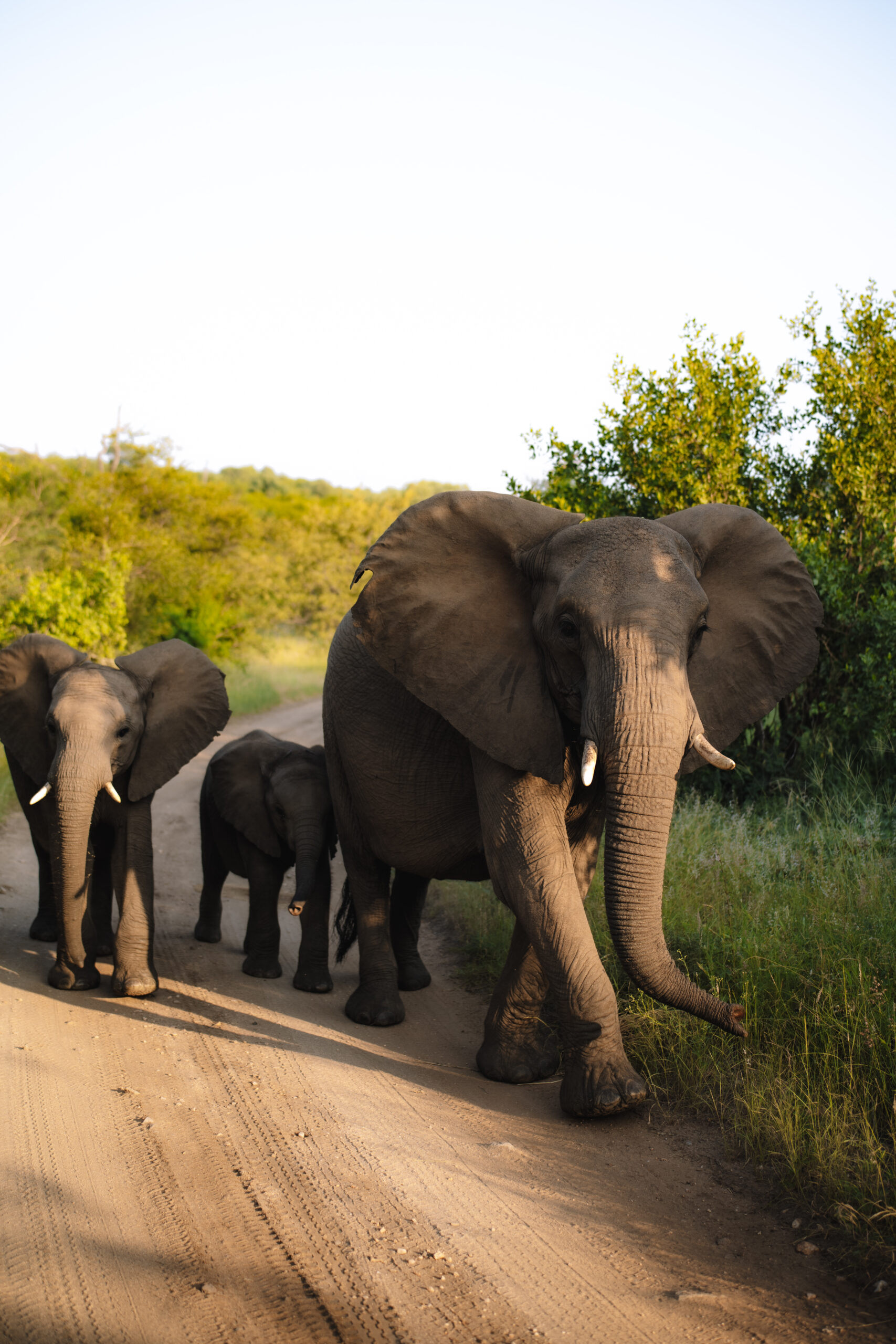
A herd of elephants may cross the road. A leopard sighting may cause the vehicle to pause. Rain may change the ceremony location. These are not failures in the timeline, they’re part of the experience.
One Week Before: Prepare to Travel


During the final week:
- Check in for flights
- Confirm transfer times
- Recheck baggage limits
- Put essential items in carry-on luggage
- Download travel documents
- Share your itinerary with someone at home
- Confirm international phone access
- Notify banks of travel where necessary
- Review weather forecasts
- Avoid making major last-minute changes
At this point, the planning should mostly be finished.
Your job is no longer to organize the wedding. Your job is to travel safely and begin enjoying the experience.
Arrival in South Africa: Give Yourselves Time to Adjust
After a long international flight, resist the urge to move too quickly.
Use your arrival day to:
- Sleep
- Eat
- Hydrate
- Recover from jet lag
- Confirm your next transfer
- Check that your luggage arrived
- Ease into the trip
Once you arrive at the safari lodge, unpack your wedding clothes early and give them time to hang.
Then slow down.
Go on your first game drive. Listen to the birds. Watch the sunset. Have dinner together. Let the reality of where you are finally sink in.
The Day Before Your Safari Elopement
The day before should feel calm, not like a frantic rehearsal day.
You may:
- Go on morning and afternoon safaris
- Meet the photographer or planner
- Walk through the ceremony location
- Confirm the weather plan
- Steam wedding attire
- Write or finish your vows
- Enjoy a massage
- Have an early dinner
- Get a full night of sleep
Try not to fill this day with unnecessary tasks.
One reason to choose an all-inclusive package is that someone else is managing the vendor communication and final logistics while you enjoy the lodge.
What a Safari Elopement Day Can Look Like
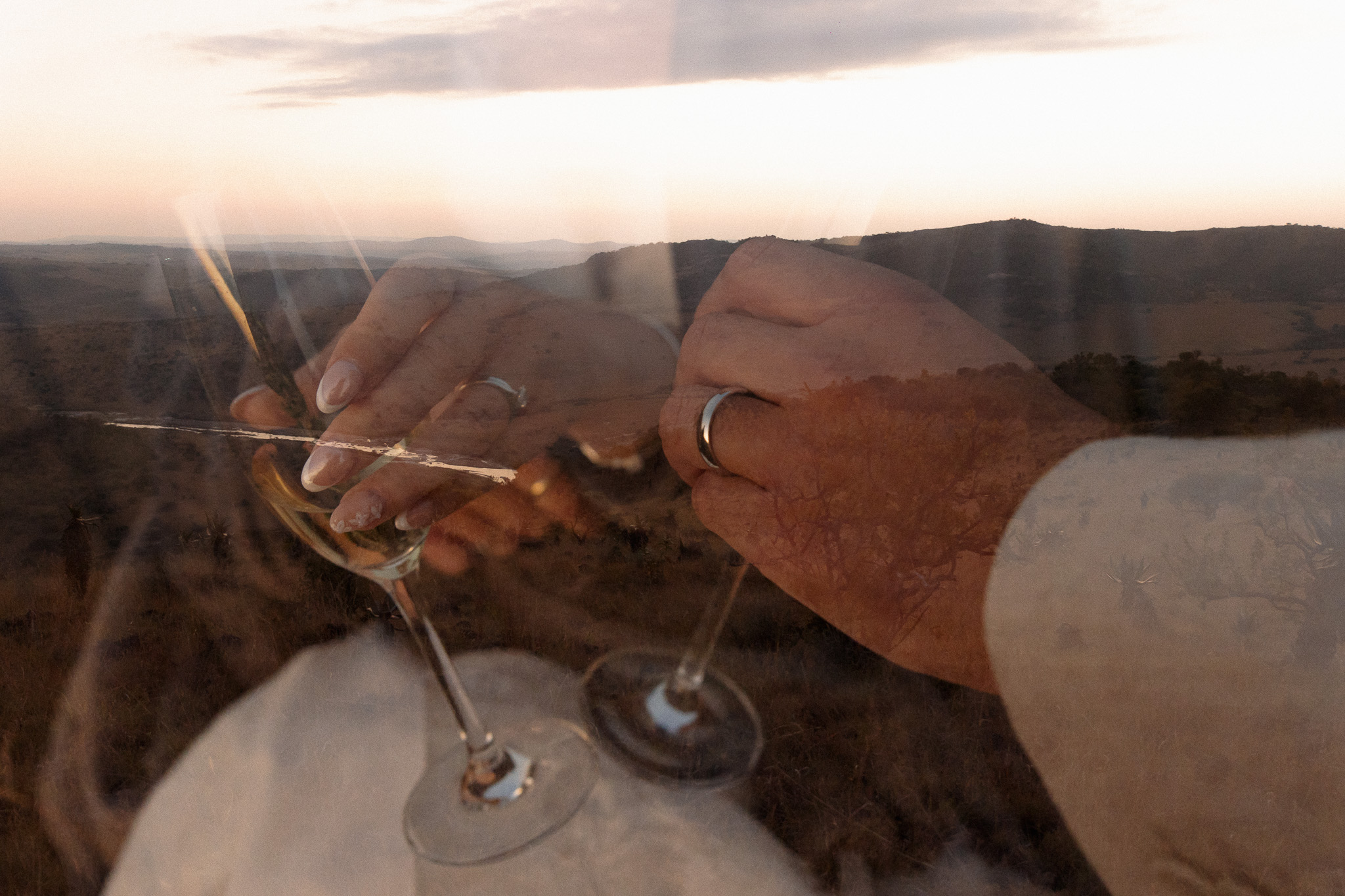
Every elopement is different, but a relaxed safari wedding day may unfold like this:
Early Morning
Wake up to the sounds of the bush and join a sunrise safari.
Stop for coffee while the reserve comes alive around you, then return to the lodge for breakfast.
Late Morning
Relax at the pool, book a spa treatment, or spend time together in your suite.
There is no reason to begin getting ready at sunrise unless that is genuinely what you want.
Early Afternoon
Hair and makeup begins.
Your photographer captures the lodge, attire, rings, vow books, and getting-ready moments.
You can get ready separately or together.
Late Afternoon
Travel to the ceremony location with your guide.
Exchange vows in the bush, share a first kiss, and celebrate with champagne.
Wildlife may appear in the distance, but sightings are always natural and never guaranteed.
Sunset
Continue onto a private game drive for portraits and sundowner drinks.
This is often one of the most memorable parts of the day because the ceremony flows naturally into the safari experience.
Evening
Return to the lodge for a private dinner, cake, a first dance, or time beneath the stars.
Then wake up the next morning already on your honeymoon.
For a real example of how the experience can unfold over several days, see Dave and Michelle’s intimate safari wedding at Isambane Lodge.
Common Safari Elopement Planning Mistakes
Choosing the Lodge Based Only on Photographs
A lodge can look beautiful online but have poor logistics, limited privacy, or restrictive ceremony policies.
Booking Flights Before the Lodge
Secure the lodge and dates first, then build the flight itinerary.
Arriving Immediately Before the Wedding
Give yourselves enough time to recover from delays and jet lag.
Trying to Guarantee Wildlife
Choose a reserve with strong wildlife viewing, but allow sightings to remain wild and unscripted.
Overplanning the Ceremony Setup
The landscape does not need much decoration.
Trying to Fit Everything Into One Day
The safari experience is better when spread over several days.
Leaving Legal Decisions Until the Last Minute
Decide early whether your ceremony will be legal or symbolic.
Choosing the Cheapest Option Without Considering the Experience
A safari lodge affects far more than accommodation. It shapes the wildlife, photography, ceremony options, food, privacy, and overall feel of the trip.
Frequently Asked Questions About Planning a Safari Elopement


How far in advance should we plan a safari elopement?
Approximately 9 to 12 months works well for many couples. Begin earlier when choosing a very small luxury lodge, traveling during peak season, bringing guests, or needing a specific date.
Can we plan a safari elopement in less than six months?
Potentially, yes. It depends on lodge availability, flights, vendor availability, and whether the ceremony will be legal or symbolic.
How many nights should we stay?
Three nights should generally be considered the minimum. Four or five nights creates a more relaxed experience and allows the lodge to feel like part of the honeymoon.
Can family or friends join us?
Yes. Some lodges are well suited to a small group, while others are better for just the couple. Guest count should be considered before selecting the lodge.
Should we legally marry in South Africa?
That is a personal choice. Some couples legally marry in South Africa, while others complete the paperwork at home and hold a symbolic safari ceremony.
Can we have elephants or giraffes at our ceremony?
Wildlife can sometimes appear near ceremony locations or during portraits, but sightings cannot be staged or guaranteed. The best approach is to choose a strong reserve and allow the experience to unfold naturally.
Do we need a separate wedding planner?
Not necessarily. My all-inclusive safari elopement packages include planning and lodge coordination, so couples do not need to independently manage multiple vendors.
When should we book international flights?
After your lodge and elopement dates are confirmed.
What is the best month for a safari elopement?
There is no single best month. Dry season offers golden landscapes and easier wildlife visibility, while green season offers lush scenery, dramatic skies, and warmer conditions.
Ready to Begin Planning Your Safari Elopement?
A safari elopement may involve more moving pieces than a local wedding, but it does not have to feel complicated.
The secret is choosing the lodge first, making the major decisions in the correct order, and working with people who understand both weddings and safari logistics.
My all-inclusive safari elopement packages are created for international couples who want the experience without having to coordinate every detail themselves.
Packages can include:
- Luxury safari-lodge accommodation
- Meals, snacks, and drinks
- Daily safari drives
- Airport and lodge transfers
- Photography
- Planning and coordination
- Hair and makeup
- Florals
- Officiant
- A customized wedding-day experience
You can arrive in South Africa knowing the important pieces have already been handled—and spend your time watching wildlife, exchanging vows, and beginning married life together in one of the most unforgettable places in the world.